Tuesday, 25 December 2018

Analysis of insertion sort

Add statement costs and number of times executed to INSERTION-SORT
• Assume that the i th line takes time ci , which is a constant. (Since the third line
is a comment, it takes no time.)
• For j = 2, 3, . . . , n, let tj be the number of times that the while loop test is
executed for that value of j .
• Note that when a for or while loop exits in the usual way—due to the test in the
loop header—the test is executed one time more than the loop body.
The running time of the algorithm is

all statements
(cost of statement) · (number of times statement is executed) .
Let T (n) = running time of INSERTION-SORT.

The running time depends on the values of tj . These vary according to the input.
Best case: The array is already sorted.
• Always Þnd that A[i ] ≤ key upon the Þrst time the while loop test is run (when
i = j − 1).
• All t j are 1.
• Running time is
T (n) = c1n + c2(n − 1) + c4(n − 1) + c5(n − 1) + c8(n − 1)
= (c1 + c2 + c4 + c5 + c8)n − (c2 + c4 + c5 + c8) .
• Can express T (n) as an +b for constants a and b (that depend on the statement
costs ci )⇒ T (n) is a linear function of n.


Worst case: The array is in reverse sorted order.
• Always Þnd that A[i ] > key in while loop test.
• Have to compare key with all elements to the left of the j th position⇒compare
with j − 1 elements.
• Since the while loop exits because i reaches 0, there’s one additional test after
the j − 1 tests ⇒tj = j .


Worst-case and average-case analysis
We usually concentrate on Þnding the worst-case running time: the longest running
time for any input of size n.
Reasons:
• The worst-case running time gives a guaranteed upper bound on the running
time for any input.
• For some algorithms, the worst case occurs often. For example, when searching,
the worst case often occurs when the item being searched for is not present,
and searches for absent items may be frequent.
• Why not analyze the average case? Because it’s often about as bad as the worst
case.
Example: Suppose that we randomly choose n numbers as the input to insertion
sort.
On average, the key in A[ j ] is less than half the elements in A[1 . . j − 1] and
it’s greater than the other half.
⇒On average, the while loop has to look halfway through the sorted subarray
A[1 . . j − 1] to decide where to drop key.
⇒t j = j/2.
Although the average-case running time is approximately half of the worst-case
running time, it’s still a quadratic function of n.
Order of growth
Another abstraction to ease analysis and focus on the important features.
Look only at the leading term of the formula for running time.
• Drop lower-order terms.
• Ignore the constant coefÞcient in the leading term.
Example: For insertion sort, we already abstracted away the actual statement costs
to conclude that the worst-case running time is an2 + bn + c.
Drop lower-order terms⇒an2.
Ignore constant coefÞcient ⇒n2.
But we cannot say that the worst-case running time T (n) equals n2.
It grows like n2. But it doesn’t equal n2.
We say that the running time is (n2) to capture the notion that the order of growth
is n2.
We usually consider one algorithm to be more efÞcient than another if its worstcase
running time has a smaller order of growth.

Designing algorithms
There are many ways to design algorithms.
For example, insertion sort is incremental: having sorted A[1 . . j −1], place A[ j ]
correctly, so that A[1 . . j ] is sorted.
Divide and conquer
Another common approach.
Divide the problem into a number of subproblems.
Conquer the subproblems by solving them recursively.
Base case: If the subproblems are small enough, just solve them by brute force.
[It would be a good idea to make sure that your students are comfortable with
recursion. If they are not, then they will have a hard time understanding divide
and conquer.]
Combine the subproblem solutions to give a solution to the original problem.

Hibernate Criteria Query examples

Hibernate supports a feature that helps us to build queries dynamically. The org.hibernate.Criteria is the interface used for this purpose. Criteria is useful
when we are supposed to apply a multiple complicated search criteria on the queries.
For a Criteria query, a Criterion Object should be constructed (i.e) a call to createCriteria() passing the class of the objects we want the query to return.
Let us go the package com.demo.CriteriaExamples and execute the class CriteriaExampleExecutor.java
Criteria Example:
Following is an example that will all the instances of the class Employee.
Criteria criteria = session.createCriteria(Employee.class);
List critList = criteria.list();
for(Object objList: critList)
System.out.println("Employee Name is "+ ((Employee)objList).getEmpName());
Limiting the number of rows returned:
This is particularly useful in pagination.
Criteria criteria = session.createCriteria(Employee.class).setMaxResults(2);
critList = criteria.list();
System.out.println("Number of rows returned "+ critList.size());
for(Object objList: critList)
System.out.println("Employee Name is "+ ((Employee)objList).getEmpName());
Narrowing the result set:
Restrictions class provides factory methods for built-in Criterion types. In our example we have used some of the factory methods like Restrictions.like(),
Restrictions.between(), Restrictions.isNotNull().
Criteria criteria = session.createCriteria(Employee.class).add(Restrictions.like("empName", "Ana%"));
critList = criteria.list();
for(Object objList: critList)
System.out.println("Employee Name is "+ ((Employee)objList).getEmpName());
Ordering the Result Set:
The class Order provides the factoy methods asc() and desc() to order objects based on any particular property.
Criteria criteria = session.createCriteria(Employee.class).addOrder(Order.asc("empName"))
.addOrder(Order.desc("salary"));
critList = criteria.list();
for(Object objList: critList)
System.out.println("Employee Name is "+ ((Employee)objList).getEmpName() + " Employee Salary is " + ((Employee)objList).getSalary());
Logical and Comparison Operators available in Restrictions Class:
All regular SQL comparison operators are available in the Restrictions class. The methods Restrictions.or() and Restrictions.and() will serve the Logical
operators.
Criteria criteria = session.createCriteria(Employee.class).add(Restrictions.or(
Restrictions.gt("salary", new Integer(23000)), Restrictions.ge("age", new Integer(30))));
critList = criteria.list();
for(Object objList: critList)
System.out.println("Employee Name salary is more than 23000 or whose age is greater than or equal to 30 is "+ ((Employee)objList).getEmpName());
Aggregate Functions():
Projections class serves the factory methods which can be used as the aggregate functions as follows.
critList = session.createCriteria(Employee.class).setProjection(Projections.max("salary")).list();
System.out.println("Maximum salary is "+ critList.get(0));
critList = session.createCriteria(Employee.class).setProjection(Projections.min("salary")).list();
System.out.println("Minimum salary is "+ critList.get(0));
critList = session.createCriteria(Employee.class).setProjection(Projections.rowCount()).list();
System.out.println("Total employees "+ critList.get(0));
critList = session.createCriteria(Employee.class).setProjection(Projections.avg("age")).list();
System.out.println("Average employee age "+ critList.get(0));
critList = session.createCriteria(Employee.class).setProjection(Projections.sum("salary")).list();
System.out.println("Sum of all the salaries "+ critList.get(0));
Also, Projections class will help us to select exactly the objects or the properties of objects we need in the query result as follows.
session.createCriteria(Employee.class).setProjection(Projections.projectionList().add(Projections.id())
.add(Projections.property("empName"))
.add(Projections.property("age"))
);

Monday, 24 December 2018

jboss fuse

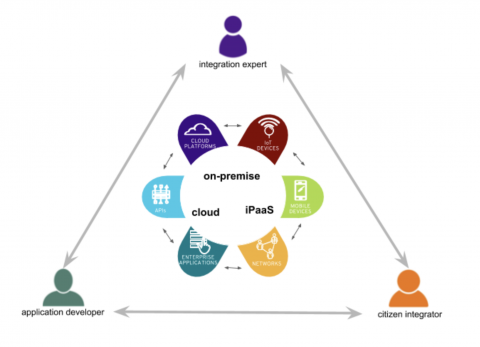
Red Hat Fuse is a distributed, cloud-native integration solution that has the flexibility to service diverse users - including integration experts, application developers, and business users - each with their own choice of deployment, architecture, and tooling. The result is an integration solution that supports collaboration across the enterprise.


Fuse Overview

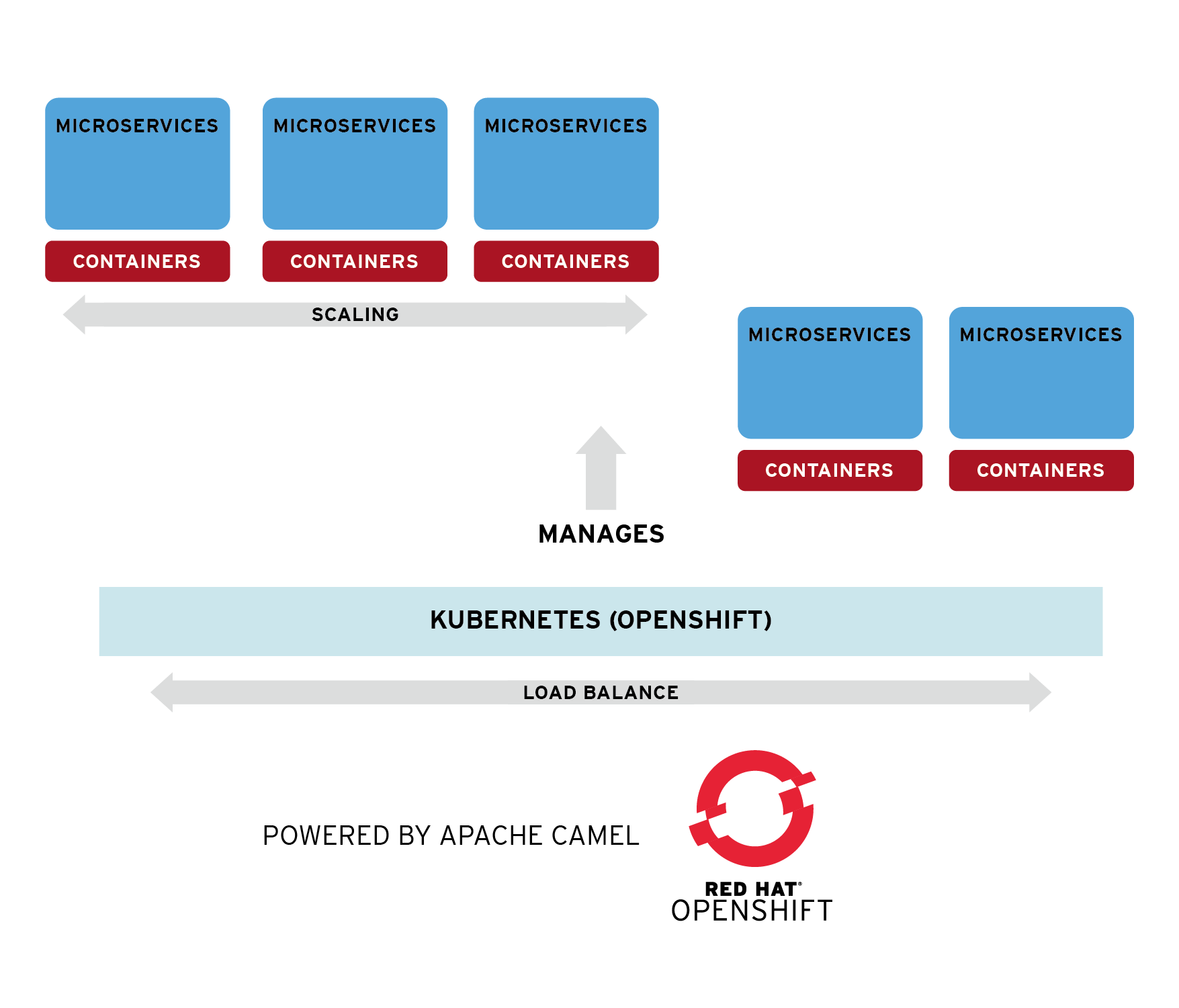
High-level overview of Red Hat Fuse

Red Hat Fuse enables developers to take an Agile Integration approach when developing solutions. By building and composing microservices, Fuse allows distributed systems deployments and a focus on scaling of services and people.


Distributed infrastructure

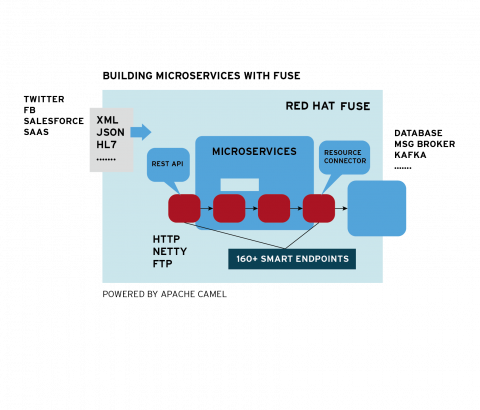
fuse microservicesDeveloping integration solution can be complex, and gets more hectic when the deployments are distributed on the cloud. Fuse, has its core integration capability based on the popular and versatile Apache Camel, provides predefined Enterprise Integration Patterns (EIPs) and over 200 connectors, are deployed on  container-native infrastructure to adapt easily and scale quickly.


Fuse persona
fuse api first


Low-code interface

Tooling allows developers and non-technical users to drag and drop predefined services and integration patterns so business units can self-serve and continuously innovative.


API First

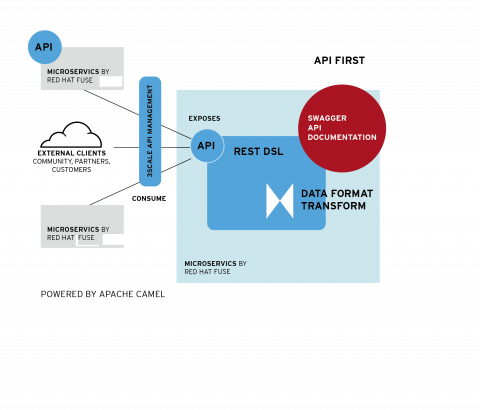
Building an API-based architecture with Red Hat Fuse could not be easier. Red Hat Fuse is intuitive and simple to configure using Camel REST. Further, developers can design and document, RESTful APIs using Swagger technology for better collaboration. With Red Hat 3scale API Management, API security, performance, control and monetization are managed for you.
Container-Based Architecture


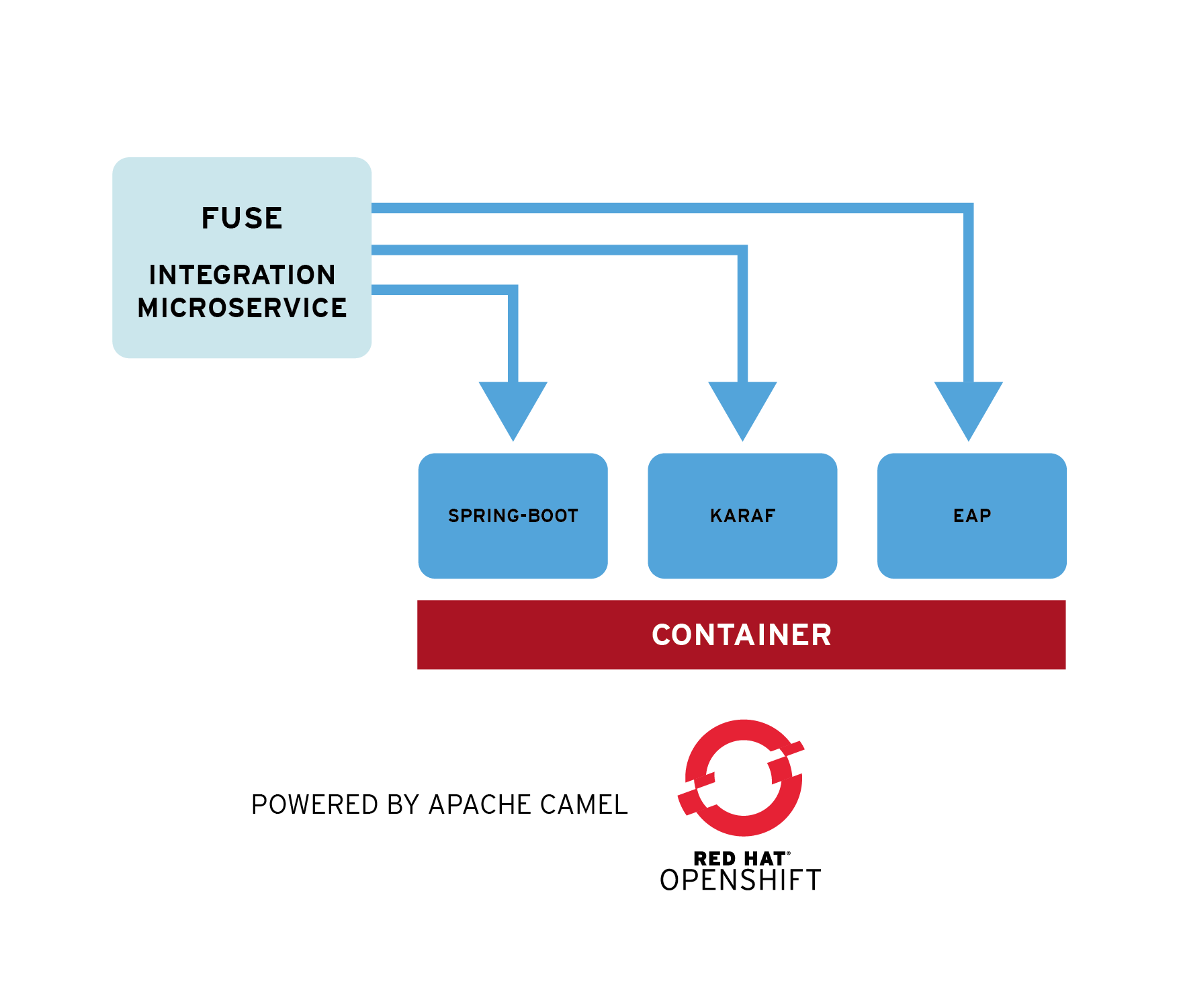
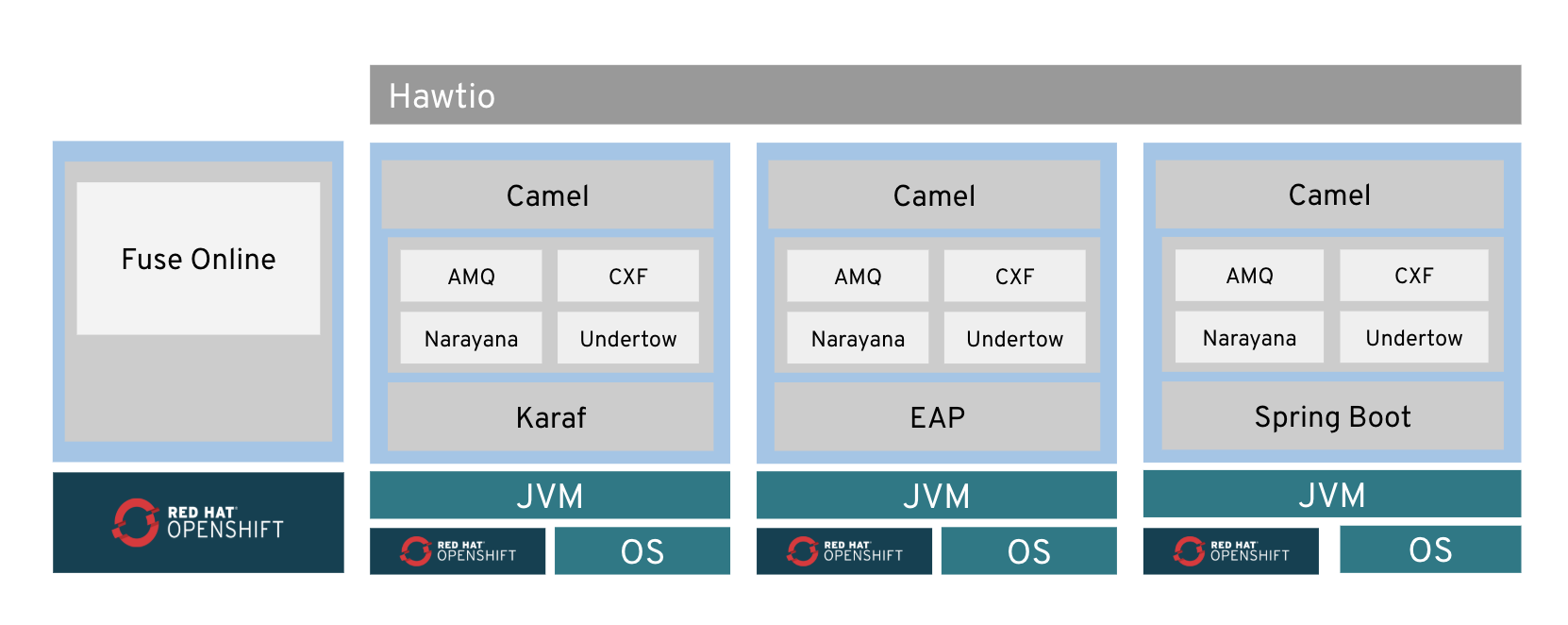
With the freedom to develop and manage services in popular container standards -  including OSGI-based Apache Karaf, Java EE based JBoss EAP, and Spring-Boot. Fuse - you can package and deploy lightweight containers in distributed environments to allow for fault isolation and consistence settings.


Continuous Improvement


A simplified pipeline construction enables faster and safer software delivery. Jenkins allows for automatic testing, enable deployment and release best practices, and with native Continuous Integration and Deployment support, Fuse allows teams to work more collaboratively with faster software delivery.

Hybrid Deployment 

Use Red Hat Fuse on-prem, in public/private clouds, or as a hosted service and have all integration infrastructure work seamlessly together allowing users to collaborate across the enterprise.


inversion of control dependency injection design pattern spring example tutorial

Introduction to the Spring IoC container and beans

Spring Framework implementation of the Inversion of Control (IoC) [1]principle. IoC is also known as dependency injection (DI). It is a process whereby objects define their dependencies, that is, the other objects they work with, only through constructor arguments, arguments to a factory method, or properties that are set on the object instance after it is constructed or returned from a factory method. The container then injects those dependencies when it creates the bean. This process is fundamentally the inverse, hence the name Inversion of Control (IoC), of the bean itself controlling the instantiation or location of its dependencies by using direct construction of classes, or a mechanism such as the Service Locator pattern.
The org.springframework.beans and org.springframework.context packages are the basis for Spring Framework's IoC container. The BeanFactory interface provides an advanced configuration mechanism capable of managing any type of object. ApplicationContext is a sub-interface of BeanFactory. It adds easier integration with Spring's AOP features; message resource handling (for use in internationalization), event publication; and application-layer specific contexts such as the WebApplicationContext for use in web applications.
In short, the BeanFactory provides the configuration framework and basic functionality, and the ApplicationContext adds more enterprise-specific functionality. TheApplicationContext is a complete superset of the BeanFactory, and is used exclusively in this chapter in descriptions of Spring's IoC container. For more information on using the BeanFactory instead of the ApplicationContext, refer to Section 5.15, “The BeanFactory”.
In Spring, the objects that form the backbone of your application and that are managed by the Spring IoC container are called beans. A bean is an object that is instantiated, assembled, and otherwise managed by a Spring IoC container. Otherwise, a bean is simply one of many objects in your application. Beans, and the dependencies among them, are reflected in the configuration metadata used by a container.

5.2 Container overview

The interface org.springframework.context.ApplicationContext represents the Spring IoC container and is responsible for instantiating, configuring, and assembling the aforementioned beans. The container gets its instructions on what objects to instantiate, configure, and assemble by reading configuration metadata. The configuration metadata is represented in XML, Java annotations, or Java code. It allows you to express the objects that compose your application and the rich interdependencies between such objects.
Several implementations of the ApplicationContext interface are supplied out-of-the-box with Spring. In standalone applications it is common to create an instance of ClassPathXmlApplicationContext or FileSystemXmlApplicationContext. While XML has been the traditional format for defining configuration metadata you can instruct the container to use Java annotations or code as the metadata format by providing a small amount of XML configuration to declaratively enable support for these additional metadata formats.
In most application scenarios, explicit user code is not required to instantiate one or more instances of a Spring IoC container. For example, in a web application scenario, a simple eight (or so) lines of boilerplate J2EE web descriptor XML in the web.xml file of the application will typically suffice (see Section 5.14.4, “Convenient ApplicationContext instantiation for web applications”). If you are using the SpringSource Tool Suite Eclipse-powered development environment or Spring Roo this boilerplate configuration can be easily created with few mouse clicks or keystrokes.
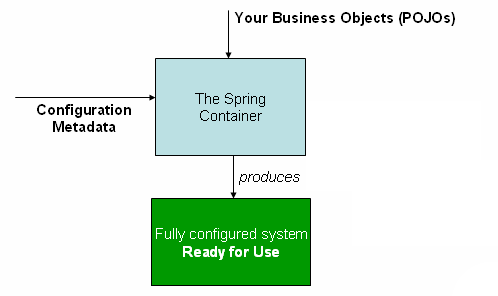
The following diagram is a high-level view of how Spring works. Your application classes are combined with configuration metadata so that after the ApplicationContext is created and initialized, you have a fully configured and executable system or application.

The Spring IoC container

Friday, 21 December 2018

Loading same class by two different class loader in java

here are, at least, two general ways to generate a ClassCastException under the conditions described. One is with a branched ClassLoader hierarchy, and the second is with a ClassLoader that does not preferentially delegate to its parent.
Read on for the long winded explanation ...

In a simple J2SE application (like "Hello World") there are at least three ClassLoader instances involved. In order (and order is very significant) these are:
1.) bootstrap classes,
2.) extension classes
3.) classpath (user) classes.
These form a hierarchy (parent-child relationship) where the child (higher number in the above list) class loaders delegate to their parent before trying to load a class themselves. The delegation behavior is by convention and is not enforced.
As long as this is a simple chain (one child per parent) and the contract for delegation is followed then ClassCastExceptions due to ClassLoader differences are impossible.
If the ClassLoader hierarchy branches (i.e. 2 or more children for any parent) then ClassCastExceptions may be thrown even if the class names are identical. This is the scenario illustrated in the earlier post by Mr Friedman-Hill where there are 2 instances of URLClassLoader, each a child of the classpath classloader.
Also, if a ClassLoader does not follow the convention of delegating first to its parent then the potential exists for ClassCastException due to different ClassLoader instances. The simplest way to do this would be to write a ClassLoader that loads a class before delegating to its parent, in which case it could load something that the parent already has loaded.
J2EE app servers use a ClassLoader hierarchy to enforce some security, e.g. not allowing EARs to access other EARs classes. The behavior depends on the app server. Some app servers use one ClassLoader per EAR and a child ClassLoader per WAR. Some use a sibling arrangement where a ClassLoader for a WAR delegates to a sibling classloader for an EJB-JAR.

A relavent reference from: http://java.sun.com/developer/technicalArticles/Networking/classloaders/index.html

"As of JDK 1.2, a bootstrap class loader that is built into the JVM is responsible for loading the classes of the Java runtime. This class loader only loads classes that are found in the boot classpath, and since these are trusted classes, the validation process is not performed as for untrusted classes. In addition to the bootstrap class loader, the JVM has an extension class loader responsible for loading classes from standard extension APIs, and a system class loader that loads classes from a general class path as well as your application classes.

Since there is more than one class loader, they are represented in a tree whose root is the bootstrap class loader. Each class loader has a reference to its parent class loader. When a class loader is asked to load a class, it consults its parent class loader before attempting to load the item itself. The parent in turn consults its parent, and so on. So it is only after all the ancestor class loaders cannot find the class that the current class loader gets involved. In other words, a delegation model is used.

Thursday, 20 December 2018

why spring framework came in java?

Why Spring Framework?

Below is a chart given which shows the comparison between Spring and various other Frameworks.

It was named Interface 21, as a reference to 21st century and released under Apache 2.0 license.

This was the first milestone release. Spring framework rapidly evolved since this release. Interface21 supported AspectJ parallely with Spring Framework.

New Features were added – extensible XML configs, support for Java 5 and dynamic languages, IoC extension points and AOP enhancements.

New features were added – support for Java 6/ JEE5, annotation configs, component auto-detection in classpath and OSGi compliant bundles.

New features were added – support for reorganized module system, SpEL, JavaConfig, embedded databases, REST support and support for Java EE 6.

Spring Data Commons Project was released. Later in 2012, Rod Johnson left the Spring team.

All Spring projects shifted to Pivotal. New features were added – full support for Java 8, websockets, higher third party library dependencies, groovy DSL for bean definitions.

It was compatible with Java 6, 7 and 8, with a focus on core refinements and modern web capabilities.

It will be the final generation within the general Spring 4 system requirements. 4.3.8 is the current version.

Reasons for Spring Frameworks’s popularity


There are generally three main reasons for Spring Framework’s popularity.


Simplicity

Testablity

Loose Coupling

Let’s discuss these topics in details.


Simplicity: Spring Framework is simple because its non-invasive as it uses POJO and POJI models.<>


POJO (Plain Old Java Objects): A Java class not coupled with any technology or any framework is called “POJO”.

POJI (Plain Old Java Interfaces): A Java interface not coupled with any technology or any frame work is called “POJI”.

Testablity: For writing the Spring application, server is not mandatory. But for struts and EJB applications, you need a server, if you want to test the application. It may need lot of changes in the source and to view those changes, each time you have to restart the server. This becomes tedious and time consuming. In case of Spring Framework, it has it’s own container to run the applications.


Loose Coupling : Spring Framework is loosely coupled because it has concepts like Dependency Injection, AOP etc. These features help in reducing dependency and increasing the modularity within the code. Lets understand this with an example.


Here I have a Bike interface which has a start() method. It is further implemented by three classes, namely : Yamaha, Honda and Bajaj.

Sunday, 16 December 2018

What is the difference between a Spring singleton and a Java singeleton(design pattern)?

The Java singleton is scoped by the Java class loader, the Spring singleton is scoped by the container context.
Which basically means that, in Java, you can be sure a singleton is a truly a singleton only within the context of the class loader which loaded it. Other class loaders should be capable of creating another instance of it (provided the class loaders are not in the same class loader hierarchy), despite of all your efforts in code to try to prevent it.
In Spring, if you could load your singleton class in two different contexts and then again we can break the singleton concept.
So, in summary, Java considers something a singleton if it cannot create more than one instance of that class within a given class loader, whereas Spring would consider something a singleton if it cannot create more than one instance of a class within a given container/context.

Friday, 30 November 2018

About

Dear readers!
fliprank, a platform studying Computer Engineering who is a passionate learner with a mind full of innovative and passionate. I started my blogging to learn more about what exists behind the computer programs that we use everyday.

contact us

I try to share articles on this blog that are informative, useful and entertaining to my readers. However, being a human, I might err sometimes with my views. I would request all my viewers to forgive me if I ever hurt their sentiments in any way through my posts.

If you have any queries, complaints or suggestions, you can contact me at fliprank@gmail.com

oops principle

S.O.L.I.D is an acronym of object-oriented design(OOD)** principles** by Robert C. Martin.